Urdhva Yoga

Navratri: Nine Practices to Awaken Shakti

Navratri: Nine Practices to Awaken Shakti.

Om Namaśchandikāyai !
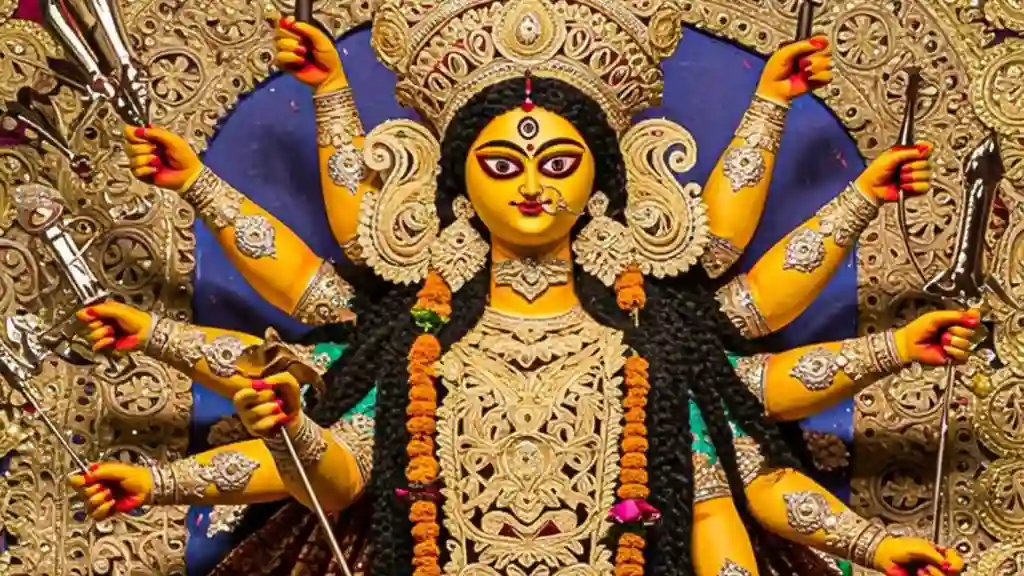
Navaratri is a sacred nine-day period dedicated to the worship of Devi Shakti, honoring her many aspects within both our inner and outer worlds. It is a celebration of the Divine Mother’s victory over the lower forces of negativity—oppression, greed, selfishness, and hatred.
The Durga Saptashati, a part of the Markandeya Purana, is traditionally recited to worship and contemplate the many forms of Mother Durga, who slays the demons Chanda, Munda, Raktabeeja, and Dhumralochana. These demons symbolize the darkness of desires, ignorance, arrogance, and greed. The very name Durga means She who takes us beyond all difficulties. Invoking her through mantras during Navaratri becomes a sadhana, helping us overcome our inner demons and transcend the negative tendencies of the mind.
To invoke the Mother Divine within us, there are various practices and observations one may follow.
Here are nine practices through the three aspects of our being – Actions (with the body), Speech and Mind (as thoughts and emotions).
You may choose to observe one practice each day, follow a single practice through all nine days, or engage on select days according to your capacity and shraddha. What truly matters is the spirit of devotion you bring to the Divine Mother in whichever way you practice.
Actions through the Body:
  • Shaucha (Purity) : Maintain cleanliness of the body and home by discarding old or unusable items, wearing fresh clothes, and keeping your space neat and well organized.
  • Upavasa (Fasting): Observe a partial or complete fast according to your capacity, work, and other commitments. Alternatively, you may choose to give up a particular food item for these days.
  • Brahmacharya (Celibacy): Remembrance of the Divine Mother will turn the lustful mind towards purity and light; and thereby a natural abstinence from sensory pleasures; so you may open yourself to higher joys of the divine.
Speech:
  • Parayana (Chanting): These are auspicious days for chanting various mantras and stotras of the Goddess. Durga Saptashati, Lalita Sahasranama or shorter mantras as Om Dum Durgayai Namah can be chanted 108 times.
  • Hitam (Pleasantness): The effect of our speech is first on us and then on the person spoken to; let your speech be pleasant and soothing to the listener.
  • Mitam (Measured): Speaking in a measured way is one of the ways to practicing silence; speech is a power – vaak shakti and speaking in a measured way, allows for the quietness of the mind and cultivating inner strength.
Mind:
  • Prasada (Clarity): Cultivating clarity of mind by reducing desires and control of sensory indulgences; replacing selfish desires with sattvic selfless desire of service.
  • Saumya (Gentleness): Be conscious of the quality of your thoughts and cultivate pleasant, gentle thoughts; Meditate upon the ‘saumya’ aspect of the Divine Mother— Her tender, nurturing grace that softens and sanctifies the heart.
  • Mauna (Silence): Practicing silence for a few hours or for a specific duration as per your circumstances and commitments. Meditating on the space element, as the substratum that holds all other elements within it yet remain unaffected and unchanged – as the sky remains unperturbed by the clouds.
Swami Sivananda Saraswati of the Divine Life Society, Rishikesh has said, “Feel that the mother sees through your eyes, hears through your ears and works through your hands. Feel that the body, mind, prana, intellect and all other functions are her manifestations.”
May the Shakti of the Divine Mother fill your hearts with devotion, purity, courage and clarity this Navaratri!

Shri Matre Namah!

Namita Sinh​a

Leave a Reply

Your email address will not be published. Required fields are marked *